Selected research

Questions, methods, and evidence.

Case studies in ML interatomic potentials, scientific computing, and polymer properties. Each records its methods, observations, and limits.

ML interatomic potentials / HPC

GPU resource trade-offs in MACE molecular dynamics

Engineering pilot · September 2026

Measuring how GPU allocation changes the runtime, memory footprint, and compute cost of the same polymer simulation workload.

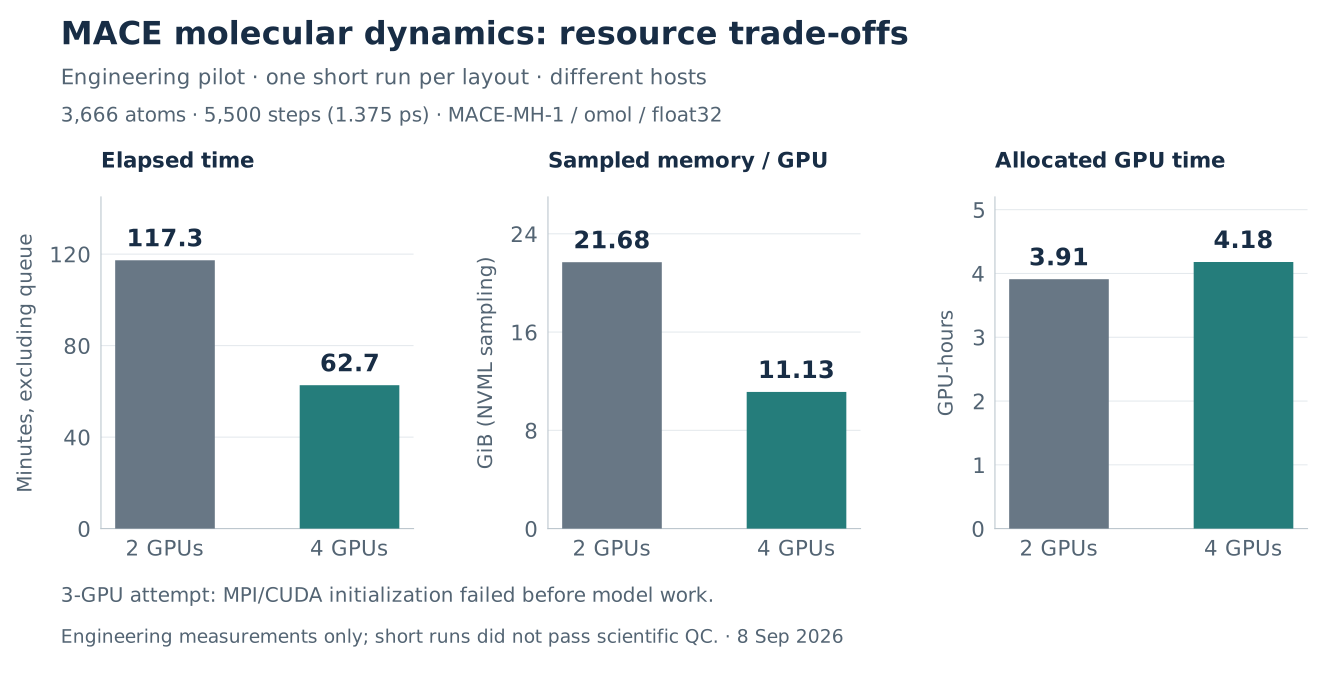
Four GPUs completed this short workload faster and used less memory per device, while consuming more total GPU time.

Methods & findings
Two versus four GPUs: runtime falls from 117.3 to 62.7 minutes, maximum sampled per-GPU memory falls from 21.68 to 11.13 GiB, and allocated GPU time rises from 3.91 to 4.18 hours. The three-GPU attempt failed at initialization.
Engineering pilot: one short run per configuration on different hosts. The three-GPU startup failure is retained; these runs do not establish equilibrium density or general scaling performance.

Polymer properties / Molecular dynamics

Preliminary polymer density screening with MACE

Preliminary screening · 17 September 2026

Following three polymer systems from molecular simulation to density estimates, sampling checks, and comparison with available reference values.

Useful property estimates require both simulation checks and a physically matched reference. A small difference alone is not sufficient validation.

Methods & findings
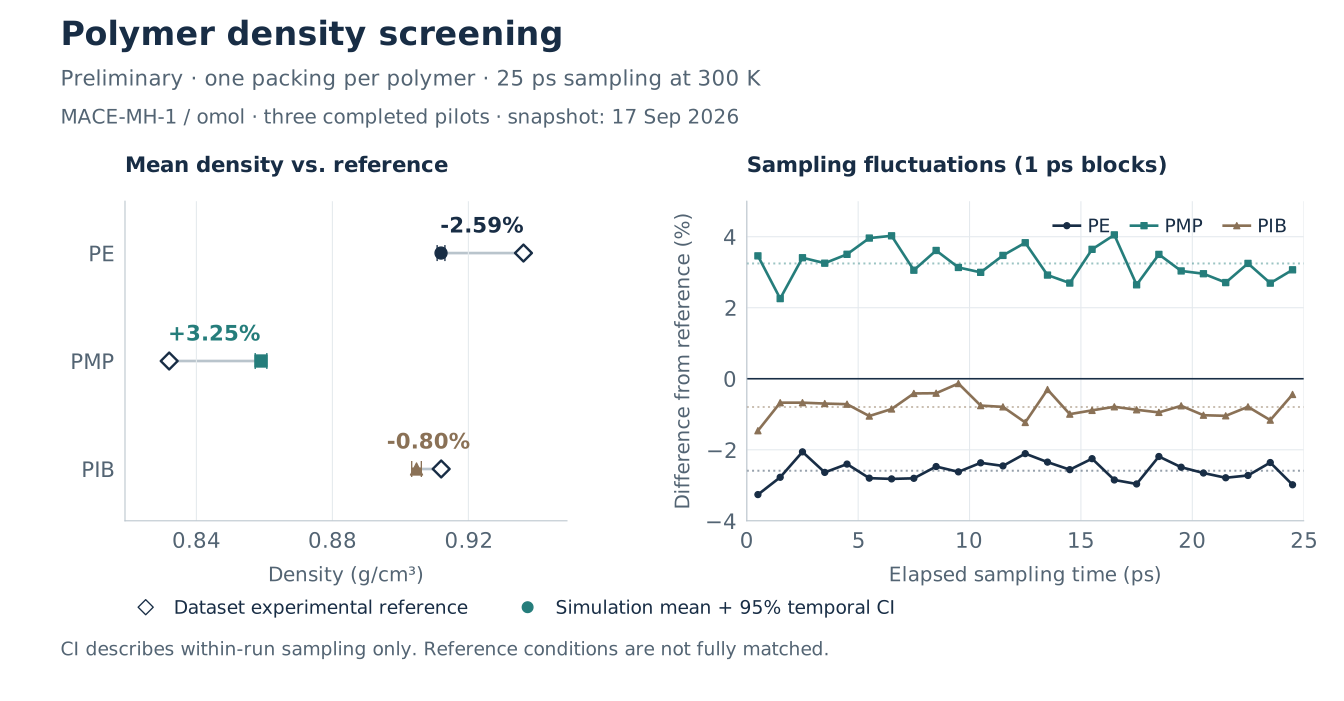
Density estimates for PE, PMP, and PIB compared with dataset reference values, alongside fluctuations over 25 picoseconds. Mean differences are minus 2.59 percent, plus 3.25 percent, and minus 0.80 percent.
Preliminary screening: three polymers, one initial packing and 25 ps sampling each. Reference conditions are incompletely specified; the intervals describe within-run sampling only.